How to Clean HVAC Coils And When To Call A Pro Instead
A step-by-step look at what homeowners can safely do themselves, and the specific points where a mistake costs far more than a service call.
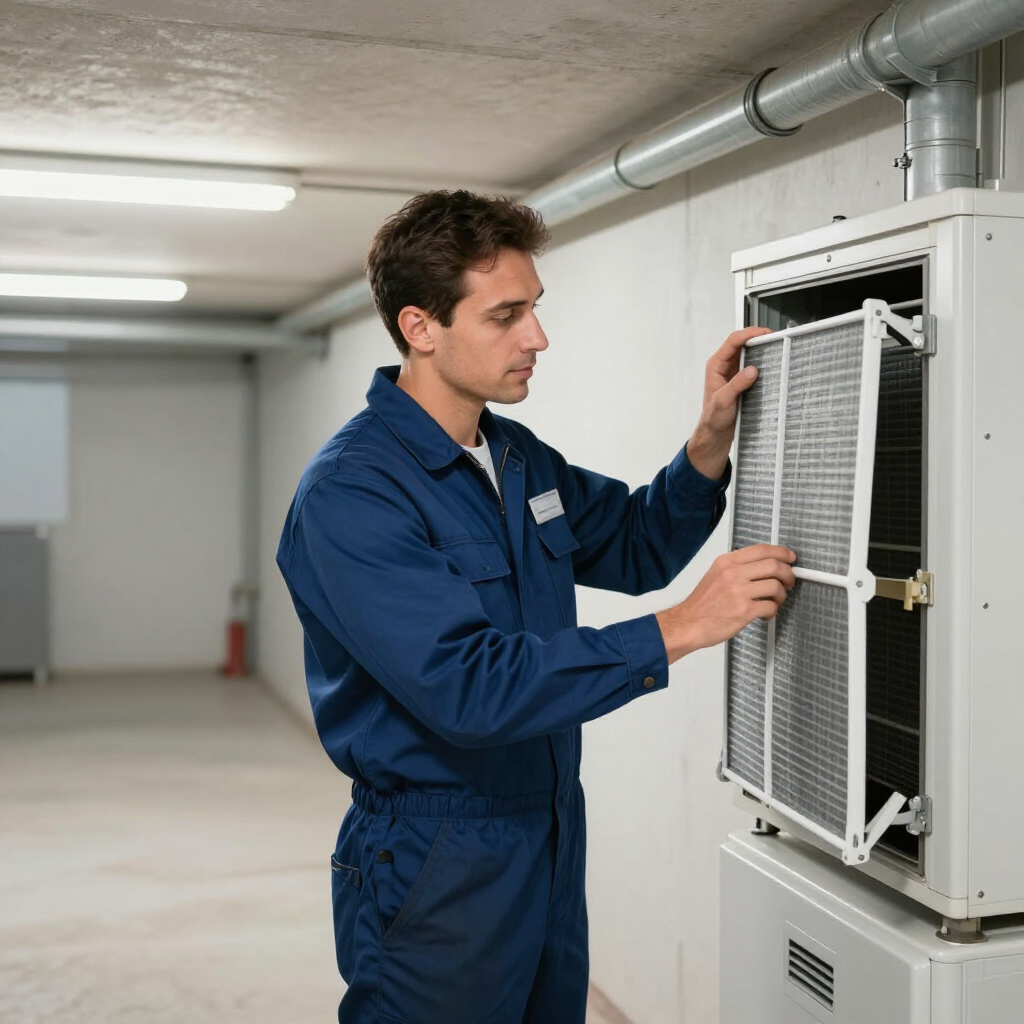
Cleaning an HVAC coil is not a single task. It is two distinct tasks with a clear dividing line between them. On one side, a homeowner with no tools and no training can do useful work without risking the equipment. On the other side, the fins are fragile enough to collapse under a consumer pressure washer, the condensate drain requires a wet-vac and treatment chemicals, and any contact with the refrigerant lines crosses into federal certification territory. The question is not whether to DIY but exactly where to stop.
What coil cleaning actually involves, and where it gets dangerous
An HVAC system has two coils. The condenser coil sits inside the outdoor unit and rejects heat. The evaporator coil sits inside the air handler and absorbs it. Both accumulate debris over a season and need periodic cleaning to transfer heat efficiently. The similarity ends there.
The condenser coil is accessible from the outside, and removing large debris from the top and sides of the unit is genuinely low-risk. The danger starts when a homeowner moves to the fins. Condenser fins are thin aluminum blades spaced a fraction of an inch apart. A standard garden hose on a high-pressure nozzle, or any consumer pressure washer, can bend those fins flat. Bent fins restrict airflow exactly as packed debris does, and straightening them requires a fin comb and enough experience to work without damaging adjacent blades.
In Wheat Ridge and surrounding Front Range communities, cottonwood seed and wind-driven dust pack condenser fins more aggressively than in lower-elevation or more humid markets. The exterior rinse step looks easy because the debris is visible and the coil is exposed. The fin damage risk is the same as anywhere else.
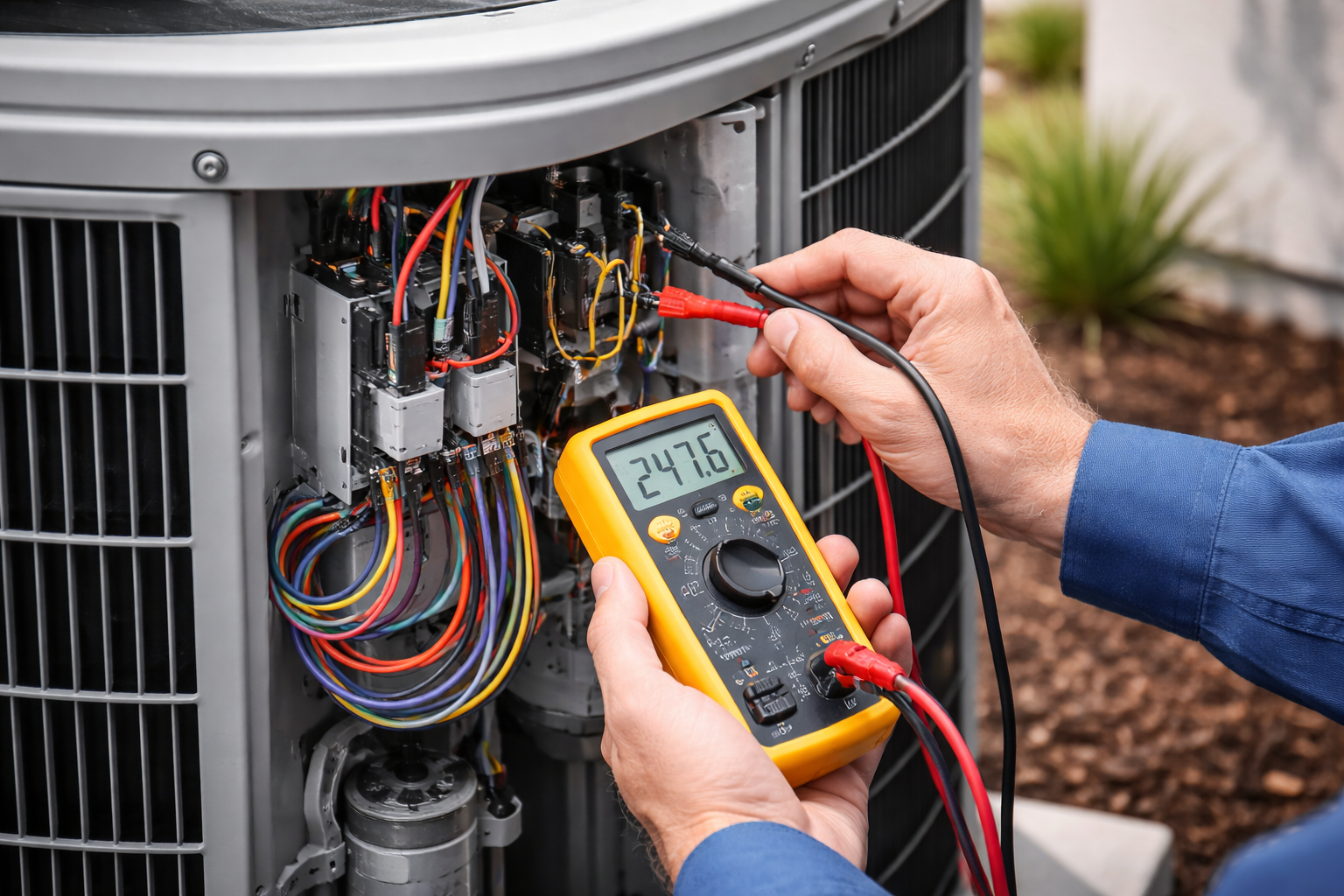
The evaporator coil is a different problem. It sits inside the air handler cabinet, behind a panel that often requires removing screws and sometimes sheet metal fasteners. The coil sits in a drain pan connected to a condensate drain line. Getting to it means getting close to refrigerant lines. Under EPA regulations at 40 CFR Part 82, Subpart F, attaching or detaching hoses and gauges to measure system pressure requires Section 608 certification, not only adding or removing refrigerant. A homeowner who picks up a gauge set to check pressures while the cabinet is open is performing a regulated activity without the required certification.
The safe DIY steps: what you can do before the technician arrives
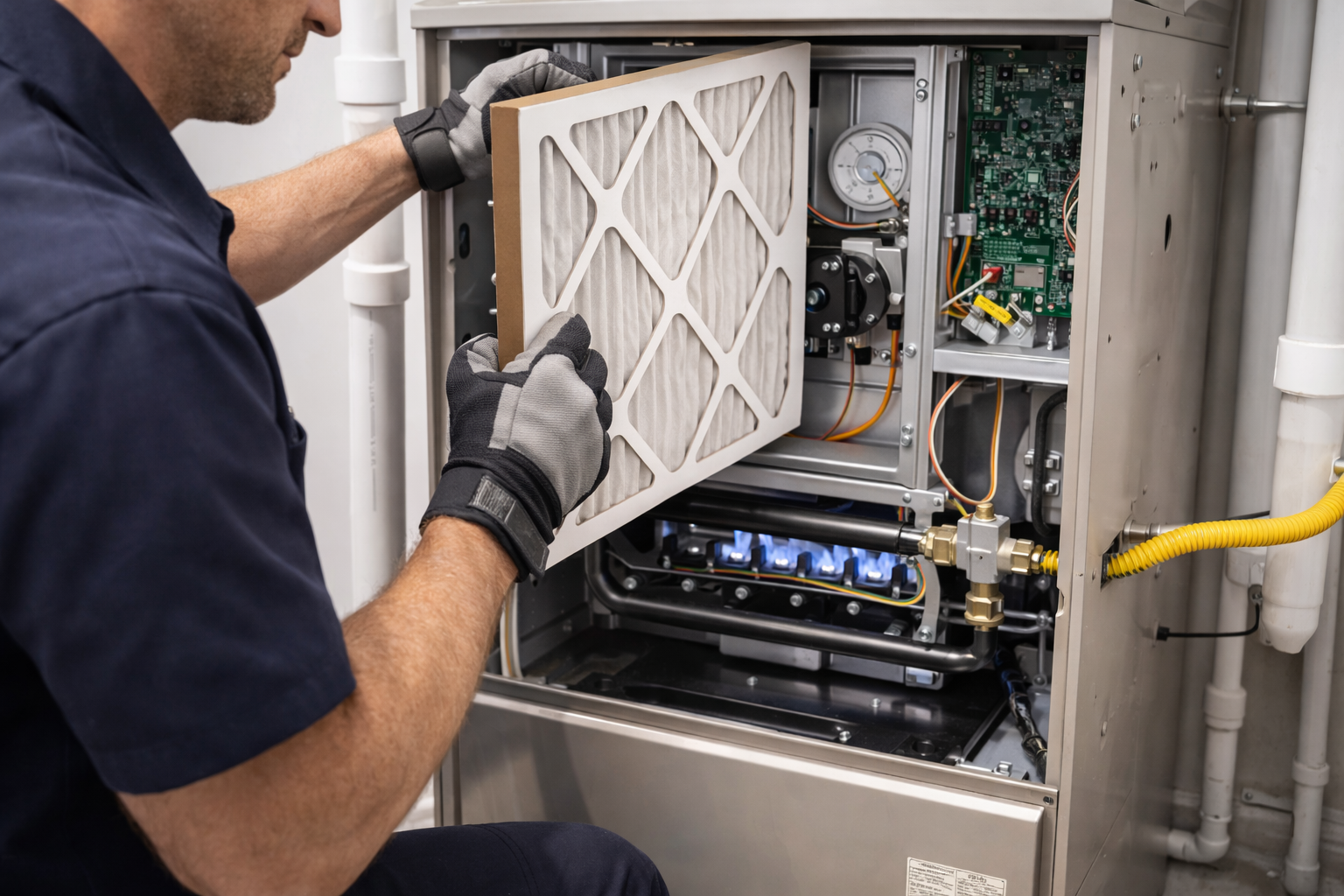
Three steps are genuinely safe for a homeowner: shutting off power at the outdoor disconnect box, removing large debris from around and on top of the condenser unit by hand, and replacing the air filter at the air handler.
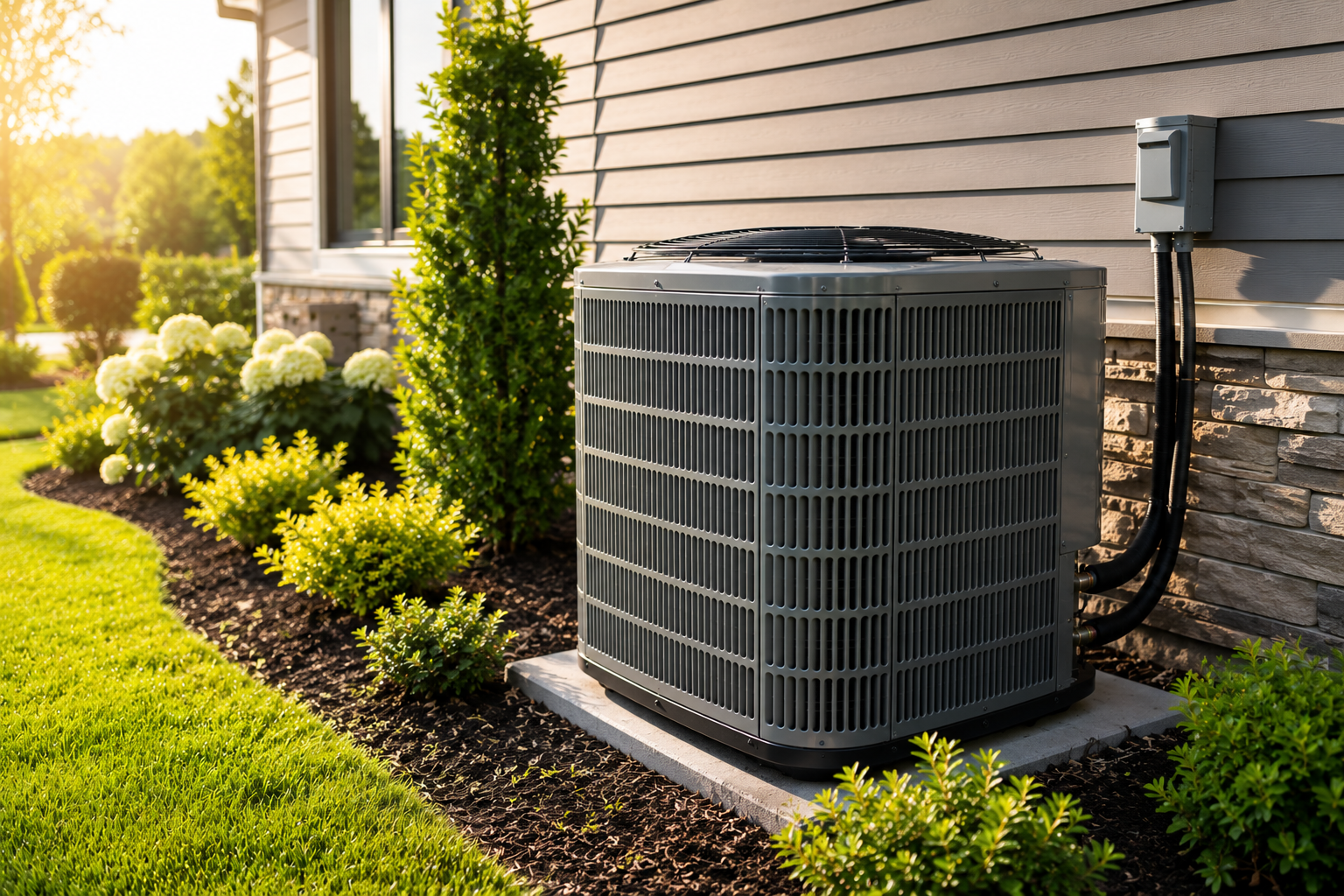
The disconnect is a pull-out block or switch mounted in a box on the exterior wall near the condenser. Pulling it or switching it off removes power to the outdoor unit before anyone puts a hand near it. This step is not optional.
With power off, remove leaves, cottonwood seed, and any other debris sitting on the condenser grille by hand or with a soft brush. Do not insert anything through the grille to reach the fins. Clear a two-foot perimeter around the unit at ground level so airflow is not blocked by overgrown shrubs or accumulated debris.
Cottonwood season in Wheat Ridge runs roughly from May through early June. Clearing debris before the seed load peaks extends the window before the fins become packed enough to restrict airflow and gives a technician a cleaner starting point. Replacing the air filter, which requires no tools and no contact with refrigerant lines or electrical components, is the one interior task a homeowner can complete without risk.
What a technician does that a homeowner cannot
Evaporator coil access is the clearest boundary. The coil is cleaned with a foaming no-rinse coil cleaner applied to the fins, allowed to break down debris, and left to drain into the condensate pan. Getting the cleaner on the coil without bending fins requires a low-pressure sprayer and the experience to work around copper refrigerant lines without contacting them. The 40 CFR Part 82 definition means that even a pressure check to confirm the system is holding charge requires Section 608 certification.
Many of Wheat Ridge's mid-century ranch homes have air handlers in tight utility closets or low-clearance mechanical spaces where the cabinet door barely clears the opposite wall. In those installations, reaching the evaporator coil is a confined-space task. The aluminum fins are exposed and fragile, and an uncontrolled movement in a tight mechanical room will contact them.
Fin straightening requires a fin comb sized to the coil's fin spacing. Using the wrong size or applying uneven pressure bends adjacent fins. Condensate drain flushing requires pushing a wet-vac line through the drain outlet and treating the line to prevent algae growth. Neither step is complicated for a trained technician. Both cause damage when done incorrectly.
Laughing Air Inc's certified technicians serve Greater Denver Metro Area daily, working across the county's full temperature range: from the ENERGY STAR design heating temperature of -2°F to the 93°F cooling design temperature recorded for the county in the 2019 ENERGY STAR Design Temperature Limit Reference Guide. Laughing Air Inc was founded to provide residential heating and cooling work without the high-pressure sales tactics that make homeowners reluctant to call a contractor.
Why professional coil cleaning costs less than the alternative
On the Housecall Pro platform, repairs made up 88% of HVAC jobs logged in Q1 2026, according to its 2026 Home Services Report. That figure describes activity on one contractor software platform, not the market as a whole. What it documents is that repair calls are the dominant category of HVAC work being dispatched.
Separately, aggregated data from roughly two million HVAC jobs on the Housecall Pro platform found that average repair revenue per job was about 6% below 2022 levels by Q4 2025. That figure is a national aggregate across the businesses using that software, not a price for any specific repair.
Laughing Air Inc prices jobs at flat rates stated before the work begins. It operates as a family-owned company, not a corporate call center, and that is reflected in how invoices are built. A flat rate quoted upfront is a different transaction than an invoice assembled after the fact.
How to schedule coil cleaning in Wheat Ridge without the guesswork
The practical window for condenser coil cleaning in this area is after cottonwood season ends, in early to mid-June, and before the first sustained heat wave, which typically arrives by late June. A system cleaned and tested before that window closes is ready before appointment availability tightens.
The evaporator coil and condensate drain can be addressed at the same visit or in fall before the heating season. For homes with gas heat, which the EIA's 2009 Residential Energy Consumption Survey found in 75% of Colorado homes, a fall visit also allows the technician to inspect the heat exchanger for cracks. A cracked heat exchanger is a carbon monoxide condition that normally means the equipment is shut off until the exchanger is replaced.
Scheduling before the summer demand peak is the one step entirely in the homeowner's control.
To schedule a professional coil cleaning with a certified technician who knows the Wheat Ridge market book us your appointment today!
Sources
- U.S. Environmental Protection Agency (U.S. Environmental Protection Agency, Current (regulation codified in 40 CFR Part 82, Subpart F; page last reviewed 2024–2025).)
- U.S. EPA / ENERGY STAR (design temps); U.S. Energy Information Administration (heating fuel share) (U.S. EPA / ENERGY STAR (design temps); U.S. Energy Information Administration (heating fuel share), 2019 (design temps); 2009 (heating fuel survey).)
- 2026 Home Services Report: How Homeowners Are Spending & Hiring (2026 Home Spending Report. 1,100+ U.S. homeowners. Surveyed Feb 25-26, 2026; released May 13, 2026.) — Housecall Pro research
- 2026 HVAC Industry Trends: Repairs Are Driving More Revenue (2026 HVAC Repair Economics Report. Aggregated, anonymized Housecall Pro platform data from HVAC businesses; tagged repair/install jobs representing ~11% of total HVAC job volume (about 2 million jobs). Not a homeowner survey.. Posted March 24, 2026; last modified April 1, 2026.) — Housecall Pro research
Recent Posts